
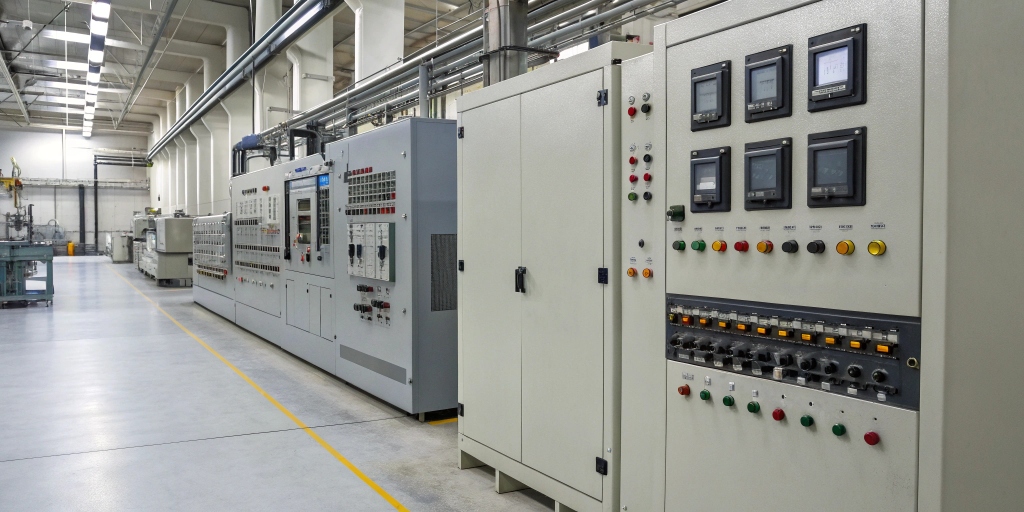

Aging automation platforms rarely fail all at once. Instead, they quietly limit expansion, complicate maintenance, and increase risk with each passing year. Industrial control systems companies approach legacy migrations with detailed planning because replacing critical infrastructure requires more than a simple hardware swap.
Parallel System Cutover Planning to Limit Downtime
Production facilities cannot afford extended shutdowns. For that reason, industrial automation system integrators often design a parallel system that runs alongside the legacy platform before final cutover. This approach allows engineers to validate signal accuracy, control logic, and network performance without interrupting live operations. Running systems in parallel reduces the risk of unexpected failures during launch. Control integrators monitor outputs from both the old and new integrated control systems, comparing results under identical operating conditions. Once performance aligns, teams schedule a controlled transition window to complete the switch with minimal downtime.
I O Mapping Audits Before Hardware Swap
Legacy systems often contain decades of undocumented wiring changes. Before replacing controllers, an integrator in control system projects performs a detailed input and output mapping audit. Each sensor, actuator, and feedback loop is verified against updated schematics. Accurate mapping prevents signal mismatches after installation. Industrial control systems companies rely on this audit to confirm that every connection is accounted for before disconnecting hardware. Clear documentation also supports long-term maintenance and troubleshooting after migration.
Emulation Testing in Staged Environments
Virtual testing environments allow engineers to simulate real production conditions. Industrial automation system integrators build staged platforms that replicate control sequences and fault scenarios without affecting live equipment. This controlled setting provides space to test logic changes thoroughly.
Emulation reduces surprises during commissioning. Control integrators can refine alarm thresholds, timing sequences, and safety interlocks in a safe environment. Thorough simulation ensures integrated control systems perform reliably before deployment on the plant floor.
Phased PLC Replacement by Production Line
Replacing all programmable logic controllers at once increases risk. Instead, many industrial control systems companies use a phased strategy, upgrading one production line or section at a time. This method spreads costs and limits exposure to operational disruption.
Gradual replacement also allows teams to evaluate system performance incrementally. Industrial automation system integrators collect feedback from operators after each phase and make adjustments before proceeding. A structured rollout keeps operations stable while modernizing infrastructure.
Data Historian Transfer with Format Checks
Historical production data holds value for quality tracking and regulatory compliance. During migration, engineers export legacy historian databases and verify file formats before importing them into new systems. This step ensures data integrity remains intact. Careful validation prevents corruption or loss of archived information. An experienced integrator in control system work confirms that timestamps, tag names, and scaling factors transfer accurately. Preserving historical data allows integrated control systems to maintain continuity in reporting and analysis.
Firmware Compatibility Reviews Before Upgrades
Modern hardware often requires updated firmware versions. Before installation, control integrators review compatibility between new controllers, network switches, and field devices. Mismatched firmware can create communication failures or unexpected behavior.
Proactive evaluation avoids commissioning delays. Industrial automation system integrators check manufacturer release notes and perform bench testing to confirm stable interaction. Ensuring firmware alignment supports smooth integration within complex industrial control systems.
Gateway Devices Bridging Old and New Platforms
Complete replacement is not always immediate. In some cases, legacy and new platforms must operate together during transition. Gateway devices translate communication protocols, allowing older equipment to exchange data with updated integrated control systems. Bridging solutions extend flexibility. Industrial control systems companies use these devices to maintain operational continuity while phasing out outdated components. Strategic gateway implementation reduces pressure to replace every element at once.
Control Cabinet Retrofits with Minimal Rewiring
Physical control cabinets often remain structurally sound even when internal components require modernization. Rather than rebuilding panels entirely, control integrators retrofit cabinets by replacing modules while preserving existing wiring pathways where possible. Selective upgrades limit installation time. An integrator in control system retrofits labels, organizes wiring, and installs new terminals without dismantling the entire cabinet. This approach supports efficiency while improving system reliability.
Operator Retraining Ahead of System Launch
Technology upgrades affect people as much as hardware. Industrial automation system integrators schedule operator training sessions before launching new integrated control systems. Hands-on instruction familiarizes teams with updated interfaces and alarm structures.
Prepared operators reduce startup errors. Industrial control systems companies recognize that confident personnel accelerate adoption and maintain productivity. Early training ensures the workforce understands new workflows before the system goes live.
Comprehensive migration strategies require technical expertise, careful documentation, and structured execution. RL Consulting includes detailed audits, phased upgrade planning, simulation testing, and seamless integration services tailored to complex facilities. Their team of experienced control integrators designs modernization plans that protect uptime while strengthening long-term performance across integrated control systems.