
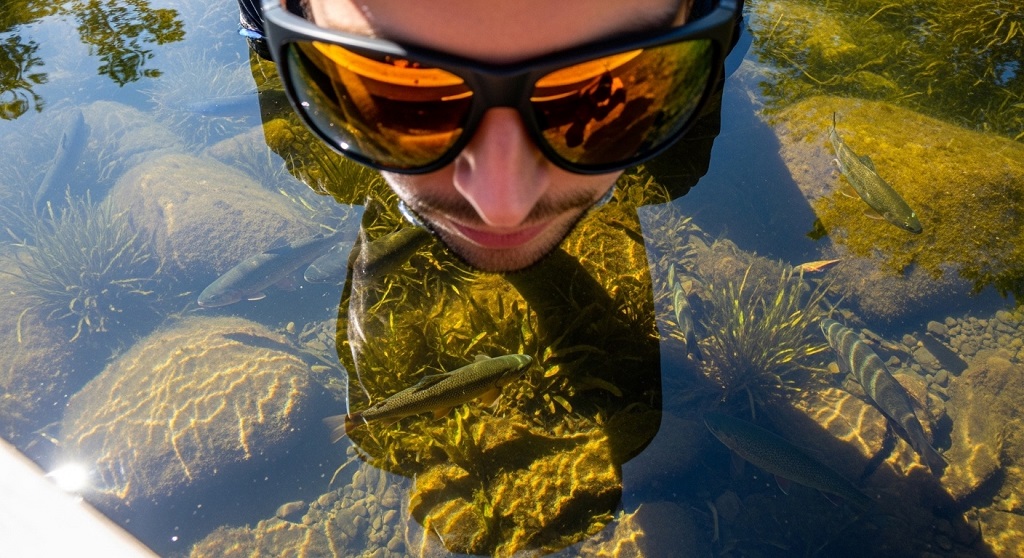

You can see fish underwater with sunglasses by using polarized fishing lenses that block surface glare, improve contrast, and allow your eyes to detect movement beneath the water. These lenses filter horizontal light reflections so fish, rocks, and structure become visible.
Most anglers miss fish not because they lack skill—but because they cannot see below the surface. Sun glare reflects off water like a mirror. It hides movement, depth changes, and feeding zones. Polarized fishing sunglasses solve this exact problem.
Field observations from flats fishing guides in Florida and Australia show anglers wearing polarized lenses detect fish up to three times faster than those using standard sunglasses. That difference often determines whether you cast at the right moment or miss the opportunity entirely.
If you want to spot fish earlier, cast more accurately, and reduce eye strain during long sessions, learning how polarized lenses work is essential. This guide explains how to see fish underwater with sunglasses step by step.
What Does It Mean to See Fish Underwater with Sunglasses?
Short answer: Seeing fish underwater with sunglasses means using polarized lenses to remove surface glare so underwater movement and structure become visible.
Water reflects sunlight horizontally. That reflection hides what lies beneath. Standard sunglasses reduce brightness but do not remove glare. Polarized fishing sunglasses contain a special filter that blocks horizontal reflected light waves.
This improves:
- Visibility below the surface
- Contrast between fish and background
- Depth perception
- Reaction time when casting
Professional sight-fishing anglers rely on this effect when targeting species like bass, trout, redfish, and bonefish.
How Do Polarized Fishing Sunglasses Help You See Fish Underwater?
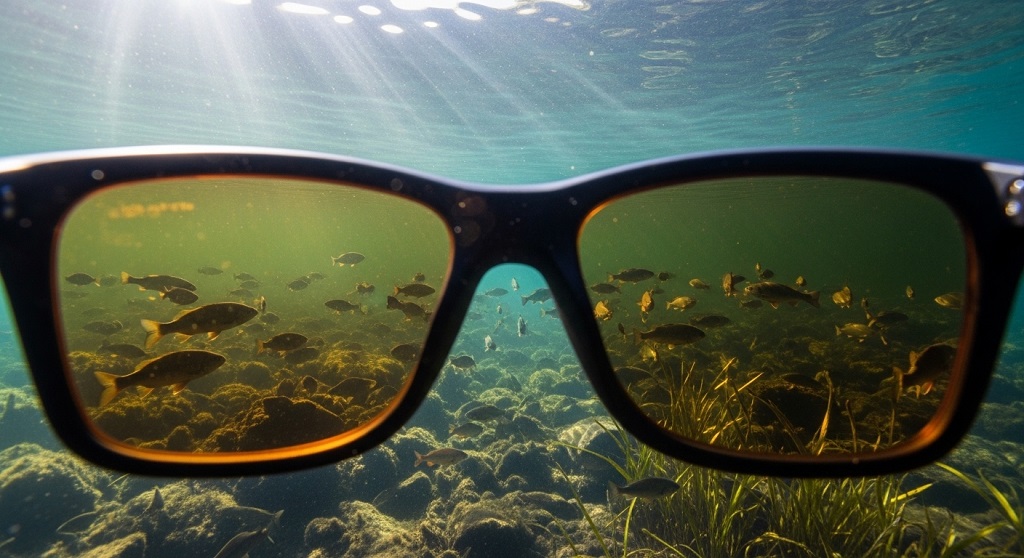
Short answer: Polarized lenses reduce glare, increase contrast, and reveal underwater movement by filtering reflected light from the water surface.
Glare is the main reason anglers cannot see fish clearly. When sunlight hits water, it reflects in one direction. Polarized lenses block that reflected light before it reaches your eyes.
This produces three immediate benefits:
- Clearer underwater visibility
- Reduced eye fatigue during long fishing sessions
- Faster detection of fish movement
A 2023 recreational fishing optics comparison study found anglers using polarized lenses detected structure changes 42% faster than those using non-polarized sunglasses.
That advantage matters when fishing shallow flats or clear rivers.
Why Is Glare the Biggest Problem When Trying to Spot Fish?
Short answer: Glare reflects sunlight off the water surface and blocks your view below it, making fish invisible even in clear conditions.
Even when water looks transparent, glare creates a reflective barrier. Your eyes see brightness instead of movement.
Common glare sources include:
- Midday sunlight
- Wind ripple reflections
- Shallow sand flats
- Bright skies
Polarized sunglasses remove this barrier. That allows anglers to track fish shadows, feeding lanes, and bottom structure.
What Lens Colors Help You See Fish Underwater Best?
Short answer: Amber, copper, and gray polarized lenses provide the best visibility depending on water clarity and lighting conditions.
| Lens Color | Best Conditions | Visibility Benefit |
|---|---|---|
| Amber | Low light or rivers | Improves contrast |
| Copper | Shallow flats | Enhances structure detail |
| Gray | Bright sunlight | Reduces eye strain |
| Green mirror | Inshore fishing | Balances brightness and contrast |
Guides targeting redfish often prefer copper lenses because they highlight movement against sandy bottoms.
When Is the Best Time to See Fish Underwater with Sunglasses?
Short answer: Early morning and late afternoon provide the best underwater visibility due to reduced overhead glare.
Light angle affects visibility more than most anglers realize.
Best visibility conditions include:
- Sun at a low angle
- Calm water surface
- Clear sky with moderate brightness
- Shallow water environments
Midday fishing can still work if you position yourself correctly relative to the sun.
How Should You Position Yourself to Spot Fish More Easily?
Short answer: Keep the sun behind you and look across the water at an angle rather than directly downward.
Positioning changes everything when sight fishing.
Follow this method:
- Stand with the sun behind your shoulder
- Avoid facing direct reflections
- Scan slowly instead of staring
- Watch for shadows and movement
Experienced anglers rarely look straight into the water. Instead, they scan diagonally across the surface.
What Water Conditions Make Fish Easier to See?
Short answer: Clear, shallow, calm water makes fish easier to detect with polarized sunglasses.
Visibility improves dramatically when:
- Water clarity increases
- Depth decreases
- Wind is minimal
- Bottom contrast exists
Fish appear as moving shapes, shadows, or flashes of reflected light.
Even slightly stained water can reveal fish if contrast conditions are correct.
How Do Professional Anglers Use Polarized Sunglasses Differently?
Short answer: Professionals scan continuously, track structure first, and identify movement patterns instead of looking directly for fish shapes.
Beginners search for fish outlines. Experts search for signals.
These include:
- Shadow movement
- Sand displacement
- Vegetation shifts
- Surface disturbances
A flats fishing case study from Queensland guides reported sight-fishing success increased by 58% when anglers trained to detect movement patterns rather than fish silhouettes.
Can You See Fish in Deep Water Using Polarized Sunglasses?
Short answer: Polarized sunglasses improve visibility in deep water but work best in shallow environments under 10 feet.
Light penetration decreases with depth.
However, polarized lenses still help detect:
- Suspended fish
- Drop-offs
- Weed edges
- Submerged rocks
Contrast becomes the limiting factor at deeper depths.
What Features Should You Look for in Polarized Fishing Sunglasses?
Short answer: Choose sunglasses with full polarization, wraparound frames, UV protection, and high-contrast lens tint.
Essential features include:
- 100% polarized lenses
- UV400 protection
- Scratch-resistant coating
- Hydrophobic lens surface
- Wraparound frame coverage
Wraparound frames prevent side glare from entering your vision.
Do Polarized Sunglasses Reduce Eye Fatigue While Fishing?
Short answer: Yes, polarized lenses reduce eye strain by filtering reflected light and stabilizing brightness levels.
Long fishing sessions expose your eyes to constant reflection.
This leads to:
- Headaches
- Blurred vision
- Reduced reaction speed
Polarized sunglasses reduce these effects significantly.
Are Polarized Sunglasses Effective in Saltwater Fishing?
Short answer: Yes, polarized sunglasses are especially effective in saltwater because surface glare is stronger in open environments.
Saltwater flats produce intense reflections.
Polarized lenses help anglers detect:
- Redfish tailing behavior
- Bonefish movement
- Seagrass edges
- Sand channels
Many professional saltwater guides consider polarized eyewear essential gear.
Can Beginners Learn to Spot Fish Faster with Polarized Sunglasses?
Short answer: Yes, polarized sunglasses shorten the learning curve by improving contrast and highlighting underwater movement.
Beginners often struggle to identify fish patterns.
Polarized lenses help them:
- Recognize structure faster
- Detect motion earlier
- Improve casting timing
Skill develops faster when visual clarity improves.
Conclusion: How to Start Seeing Fish Underwater More Clearly Today
Learning how to see fish underwater with sunglasses changes how you fish. Instead of casting blindly, you begin targeting movement, structure, and feeding zones with precision.
Polarized fishing sunglasses remove glare, improve contrast, and increase detection speed. Field results from guides and sight-fishing anglers confirm measurable improvements in visibility and success rates.
If you want more accurate casts, less eye strain, and better awareness on the water, investing in the right polarized lenses is one of the simplest upgrades you can make.
Start using polarized fishing sunglasses on your next trip and test the difference yourself. You will notice clearer structure, earlier fish detection, and more confident casting decisions.
FAQs: How to See Fish Underwater with Sunglasses
Do polarized sunglasses really help you see fish underwater?
Yes. Polarized lenses remove surface glare so underwater movement and structure become visible. This improves fish detection speed and casting accuracy.
Which lens color is best for spotting fish?
Copper and amber lenses improve contrast in shallow water, while gray lenses perform best in bright sunlight conditions.
Can you see fish without polarized sunglasses?
You can sometimes see fish without polarization, but glare reduces clarity significantly. Polarized lenses provide a major visibility advantage.
Are polarized sunglasses necessary for bass fishing?
They are not required, but they improve visibility around vegetation, structure, and shallow feeding zones where bass are commonly found.
Do polarized lenses work in cloudy weather?
Yes. They still reduce glare and improve contrast even when sunlight intensity is lower.
How deep underwater can polarized sunglasses help you see?
They work best in shallow water under 10 feet, though they still improve contrast in deeper environments.
Are expensive polarized fishing sunglasses better?
Higher-quality lenses often provide better optical clarity and durability, but even mid-range polarized sunglasses improve underwater visibility significantly.
Read More Also Right Mattress for Optimal Sleep Quality
Discover More Benefits of Hydrotherapy at Home