
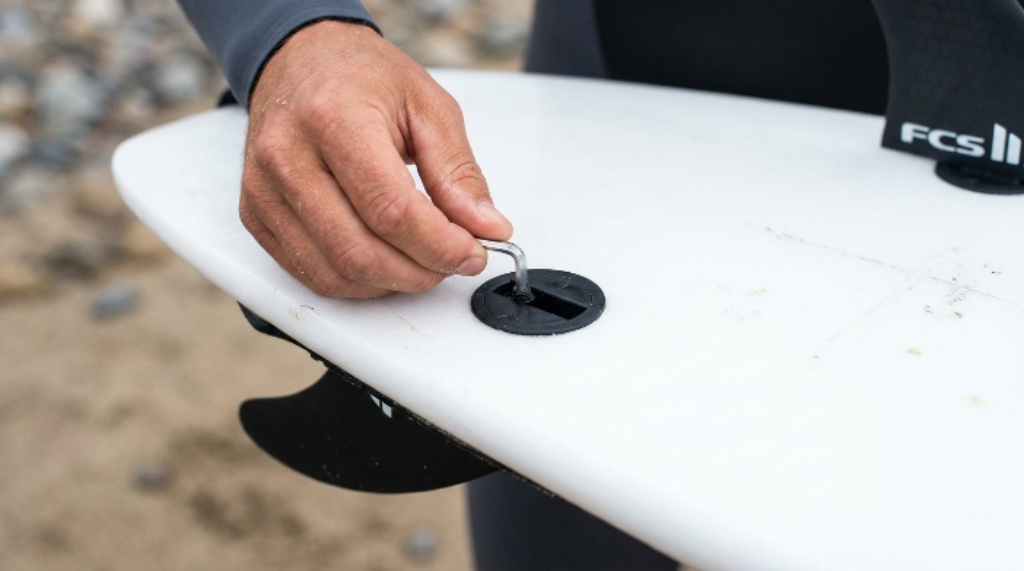

A missing or damaged fin screw is one of those small problems that can ruin an entire surf session. You are ready to paddle out, and then you realize your fin is loose or missing entirely. It happens more often than most surfers expect. However, the fix is simple once you understand what you are looking for.
Choosing the correct fin screw size is not complicated. But it does require a little knowledge about your board and your fin system. This article will guide you through everything you need to know. Therefore, next time you need a replacement, you will find the right screw quickly and get back in the water without delay.
Why Fin Screws Matter More Than You Think
Fin screws are small, but their job is critical. They hold your fins firmly in place while you ride. Without a secure fin, your board loses directional stability. You cannot carve properly, and your performance suffers significantly.
Beyond performance, loose fins are a safety concern. A fin that detaches mid-ride can cause you to fall unexpectedly. Additionally, a detached fin can damage your board or injure someone nearby in the water.
Therefore, keeping a few spare fin screws in your board bag is always a smart idea. They weigh almost nothing, and they can save an entire session.
The Main Fin Box Systems and How They Differ
Before choosing a screw, you need to identify which fin system your board uses. Different systems require different hardware. There are four major fin systems used on modern surfboards.
FCS and FCS II
FCS, which stands for Fin Control System, is one of the most widely used systems in the world. The original FCS system uses two small plugs embedded in the deck of the board. Each fin tab slots into these plugs and is secured with a small grub screw, also called a set screw.
FCS II is the newer version. It uses a click-in mechanism that does not require a screw at all. However, many surfers still use the original FCS system, so screws remain important for this setup.
Futures Fins
Futures is another extremely popular system. It uses a single long box that runs along the bottom of the board. The fin slides into this box and is held in place with one screw. Futures screws are slightly different in size and thread from FCS screws. Therefore, the two are not interchangeable.
Single Box Systems
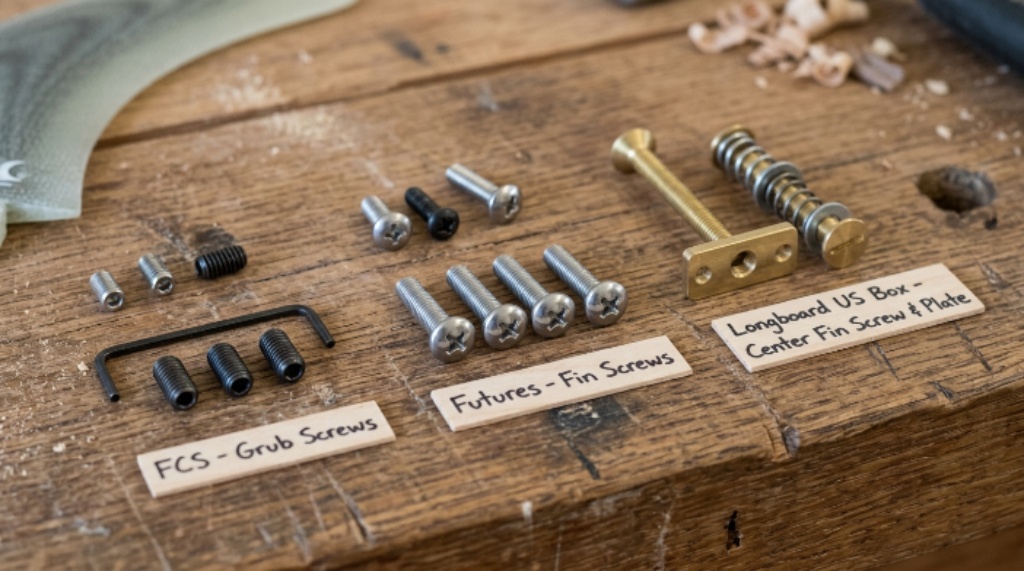
Longboards and some mid-length boards use a single center box, often called a US box or a longboard center box. This system is much larger than shortboard plug systems. It uses a flat-head machine screw and a small metal plate to clamp the fin in place. The screw here is noticeably longer and wider than those used in FCS or Futures systems.
Leash Plug Screws
Although not a fin box, the leash plug also uses a small screw. This screw sits in the center of the plug and holds the leash string in place. It is similar in size to FCS grub screws and is worth mentioning as part of your overall surfboard parts awareness.
Standard Fin Screw Sizes Explained
Now that you know the systems, here is a breakdown of the standard fin screw sizes you will encounter. Understanding these measurements will help you pick the right replacement every time.
- FCS grub screws are typically M4 size, which means they have a 4mm diameter thread. They are usually around 6mm to 8mm in length. These are small hex-socket screws, and you need a specific FCS key or a 3mm hex wrench to tighten them.
- Futures screws are also in the M4 range but are slightly longer, usually around 10mm. They feature a Phillips head and are tightened with a standard screwdriver. Some Futures fins also accept a flathead driver.
- US longboard box screws are significantly larger. They are typically M6 or M8 screws, around 20mm to 25mm in length, with a flat or Phillips head. They work together with a flat metal plate that distributes clamping pressure across the fin base.
- Leash plug screws resemble FCS grub screws closely. They are typically M4 with a hex socket or Phillips head, around 6mm in length.
Knowing these sizes is the foundation of any practical compatibility guide for surf hardware. However, always double-check your specific fin brand, as minor variations do exist between manufacturers.
How to Identify the Right Screw for Your Setup
If you are unsure what screw your board needs, there are a few reliable ways to find out.
Check Your Existing Screw
The easiest method is to remove the existing screw and take it to your local surf shop. A staff member can match it immediately. Alternatively, use a thread gauge or digital caliper to measure the diameter and length yourself.
Identify Your Fin System
Look at the bottom of your board. FCS plugs appear as two small round inserts per fin position. A Futures box is a single rectangular channel running front to back. A US box is a much longer channel, typically found on longboards near the tail.
Once you identify your system, you can shop with confidence. Most surf shops and online retailers organize their hardware by system name, which makes it easy to find what you need.
Check the Fin Manufacturer
The fin brand often specifies which screws are compatible. FCS sells its own branded screws. Futures does the same. Using the manufacturer-recommended screw ensures the best fit and reduces the risk of stripping the threads inside the box or plug.
Materials Matter: What Fin Screws Are Made From
Fin screws are exposed to saltwater regularly. Therefore, the material they are made from is very important.
Stainless steel is the best choice for most surfers. It resists rust and corrosion well, even after repeated saltwater exposure. Most quality fin screws from reputable brands use stainless steel as a standard.
Titanium screws are also available. They are lighter and even more corrosion-resistant. However, they come at a higher price. For most recreational surfers, stainless steel is more than adequate.
Avoid standard steel or zinc-plated screws entirely. They will rust quickly in saltwater and can seize inside your fin box. A rusted screw is extremely difficult to remove without damaging the box itself.
Additionally, some surfers use a small amount of surf wax or anti-seize compound on the screw threads. This makes future removal much easier, especially after long sessions or extended storage.
Tools You Need for Fin Screw Installation
Having the right tool on hand makes the whole process quick and easy. Here is what you will commonly need:
- FCS key or 3mm hex wrench for FCS grub screws. Many surfers keep one in their board bag at all times.
- A Phillips head screwdriver for Futures fins and US box systems.
- A flathead screwdriver as a backup for some Futures and leash plug screws.
- A small coin can work in emergencies for larger flathead screws, such as those in a US longboard box.
Some surfers prefer multi-tools that include a hex key and screwdriver in one compact device. These are ideal for travel and keeping in your car.
Tips for Maintaining Your Fin Screws Over Time
Replacing screws is easy, but preventing problems is even better. A few good habits will keep your screws in working condition for much longer.
Rinse your board with fresh water after every session. This simple step removes salt deposits that can corrode metal hardware over time. Pay attention to the area around your fin plugs and boxes.
Check your screws regularly. Give each one a quick tighten before you paddle out. Screws can loosen gradually from the vibration and impact of surfing. A loose screw is easier to deal with on land than in the water.
Store a few spare screws in your board bag. They are inexpensive and take up almost no space. Additionally, knowing your screws fit correctly before you head to the beach removes a potential source of frustration entirely.
Conclusion
Choosing the correct fin screw for your surfboard does not have to be confusing. The key is understanding which fin system your board uses. From there, selecting the right size and material becomes straightforward.
FCS systems use small M4 grub screws tightened with a hex key. Futures fins use slightly longer M4 Phillips screws. Longboard US box systems need larger M6 or M8 flat-head screws. Always choose stainless steel for corrosion resistance, and keep spares on hand at all times.
Understanding standard fin screw sizes and the basic compatibility guide for each system is all you really need. With the right knowledge and a spare screw in your board bag, a missing or stripped screw will never ruin your surf session again.
Frequently Asked Questions
1. Are FCS and Futures fin screws interchangeable?
No. Although both systems often use M4-diameter screws, the length, head type, and thread pitch can differ. FCS uses a hex socket grub screw, while Futures uses a Phillips head screw. Always use the screw designed for your specific fin system to ensure a proper fit.
2. What happens if I use the wrong size fin screw?
Using the wrong size screw can strip the threads inside your fin plug or box, which is an expensive repair. A screw that is too long can crack the plug from inside the board. A screw that is too short will not hold the fin securely, creating a safety hazard.
3. How tight should a fin screw be?
Fin screws should be firm but not over-tightened. You want the fin to feel completely secure without any movement. However, over-tightening can strip threads or crack the plug. A snug fit achieved with moderate pressure is ideal. If the screw feels like it is spinning without gripping, the threads may already be stripped.
4. Can I use regular hardware store screws as a replacement?
In an emergency, a correctly sized stainless steel screw from a hardware store may work as a temporary fix. However, generic screws may not have the exact thread pitch or head profile of surf-specific screws. Additionally, non-marine-grade stainless steel will corrode faster. It is always better to use screws designed specifically for surfboard parts.
5. How often should I replace my fin screws?
There is no fixed schedule for replacing fin screws. However, you should inspect them regularly for signs of rust, corrosion, or worn threads. If a screw is difficult to tighten or does not hold the fin firmly, replace it immediately. Most surfers replace screws once or twice a year as a matter of routine maintenance.
Related Topics:
How to Choose the Best Driver Clubs in 2026 for Longer Shots
How to Choose the Best Surfboard Fin Bag for Safe Storage