
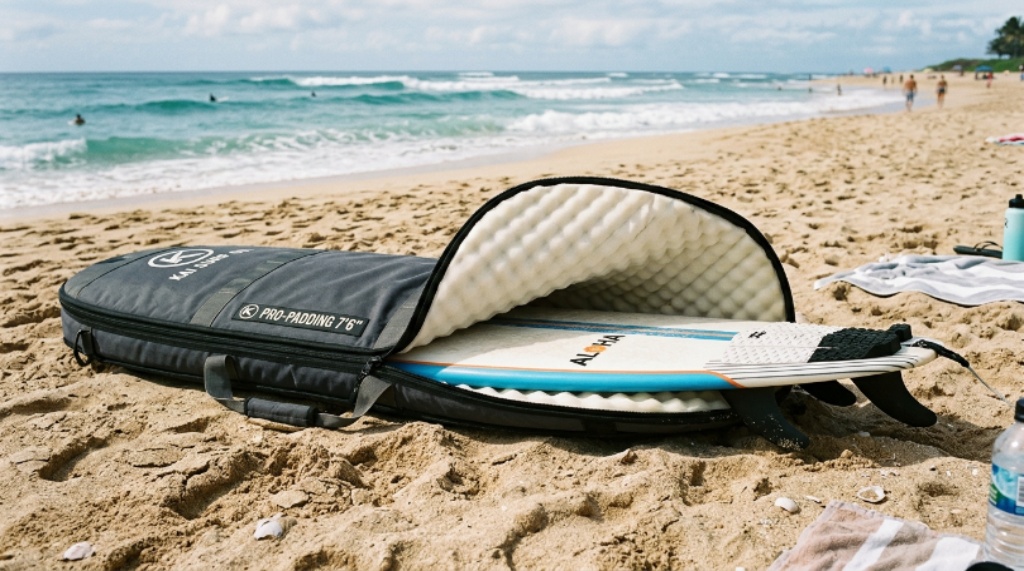

What Are Anti-Ding Surfboard Bags?
Every surfer knows the feeling. You pull your board out after a trip, and there it is — a fresh ding, a crack, or a pressure dent you did not expect. Anti-ding surfboard bags exist to prevent exactly that. They are specially designed covers built to absorb impact, block UV rays, and shield your board from the rough handling that comes with travel, storage, and transport.
These bags are not just sleeves. They are engineered with layered materials that work together to cushion your board from all angles. Understanding how they work helps you make a smarter buying decision.
How the Protection System Works
The magic of an anti-ding bag comes down to its layers. Most quality bags use a multi-layer construction. Each layer plays a specific role in keeping your board safe.
The outer shell is usually made from tough nylon, polyester, or a heat-reflective material. This layer handles abrasion and deflects sunlight. Sunlight is one of the biggest threats to a surfboard’s resin, and a reflective outer shell can cut down heat absorption significantly.
Beneath the shell sits the padding. This is where foam padded bags earn their reputation. The foam layer — often made from PE foam or closed-cell foam — absorbs shock on impact. It cushions the board when it gets bumped against car racks, airport conveyor belts, or luggage carts. The thicker the foam, the better the protection. Most standard bags use 5mm to 10mm of padding. Travel-specific bags can go up to 20mm or more.
The inner lining is the third layer. Many bags use a soft fleece or silver foil lining. Fleece prevents surface scratches. Silver foil lining reflects heat from the inside out, keeping the board cooler during storage in hot conditions like a parked car or a sunny beach lot.
Additionally, the seams, zippers, and handles all contribute to overall durability. Reinforced stitching around stress points prevents tearing. Wide, padded handles make carrying easier and reduce the risk of dropping the board accidentally.
Day Bags vs. Travel Bags: Knowing the Difference
Not all surfboard bags are built for the same purpose. There are two main categories, and choosing the right one depends on how you use your board.
Day bags, also called socks or coffin bags, are lightweight covers designed for short trips. They offer basic protection from sun, dust, and minor scratches. However, they are not built for airline travel or rough handling. They are best for driving to the beach or storing your board at home.
Travel bags are a different story. These are heavy-duty bags made for flights, road trips, and any situation where your board faces serious risk. They feature thick foam padding, lockable zippers, and reinforced base panels. Some include internal dividers so you can pack multiple boards or fins safely. If you surf during vacations or competitions, a travel bag is worth every cent.
Therefore, before you buy, ask yourself: Am I protecting my board for daily use, or am I protecting it for travel?
Key Features to Look for in a Quality Bag
Shopping for a surfboard bag can feel overwhelming. There are dozens of options at every price point. However, focusing on a few core features makes the decision much easier.
Padding thickness matters most. For day use, 5mm to 10mm is fine. For travel, look for at least 15mm. Some premium bags advertise 20mm or 25mm padding, which provides excellent shock absorption for checked luggage.
Zipper quality is another critical factor. Cheap zippers break under stress. Look for YKK zippers or heavy-duty alternatives with large pull tabs. A broken zipper mid-trip is a serious problem.
The fit of the bag also plays a big role. A bag that is too large lets your board slide around inside, which defeats the purpose of the padding. A good bag should fit snugly but allow you to slide the board in and out without forcing it.
Carry options are worth checking too. Some bags offer single shoulder straps. Others have backpack-style double straps, which distribute weight evenly and reduce fatigue on long walks through airports or across parking lots.
Ventilation flaps are a bonus feature that many surfers overlook. They prevent moisture buildup inside the bag, which can cause delamination and foam rot over time.
Surf Protection Tips for Getting the Most from Your Bag
Even the best bag works better when you use it correctly. Here are some practical surf protection tips that extend the life of both your bag and your board.
- Rinse your board with fresh water before placing it in the bag. Salt and sand act like sandpaper inside a bag and scratch the surface over time.
- Never store a wet board in a sealed bag for more than a few hours. Moisture trapped inside promotes mold and weakens the foam core.
- Use fin covers or remove fins entirely before packing your board. Fin boxes and exposed fins are common sources of internal damage during transport.
- Avoid leaving your bag in direct sunlight for extended periods, even if it has a reflective outer shell. Prolonged heat still degrades the foam padding over time.
- Check your bag’s zippers and seams regularly. Small tears or stuck zippers are easy to fix early but become major problems if ignored.
Following these surf protection tips costs nothing but a few minutes of care. They add years to the life of your equipment.

Which Bags Are Worth Buying?
There are several standout options across different price ranges. Here is a breakdown of what to consider at each level.
At the entry level, bags from brands like Creatures of Leisure and FCS offer reliable foam padded bags with 5mm to 10mm padding. They are affordable, well-made, and suitable for surfers who drive to the beach and store their boards at home. Prices typically range from $40 to $80.
In the mid-range, brands like Dakine and Ocean & Earth produce bags with 10mm to 15mm padding, better zipper quality, and more carry options. These are excellent for surfers who travel occasionally or need a bag that handles rougher conditions. Expect to spend $80 to $150.
At the premium level, bags from Curve Boardbags and Sackit offer 20mm or more of padding, full-length internal fleece lining, and reinforced travel construction. These are built to survive airline handling, which is one of the harshest environments a surfboard bag can face. They cost $150 to $300 or more, but they are worth it for frequent travelers.
Additionally, custom bag makers allow you to choose padding thickness, color, and dimensions. This is ideal for surfers with unusual board shapes like longboards, guns, or fish shapes that standard bags do not fit well.
Conclusion
Anti-ding surfboard bags are one of the most practical investments a surfer can make. They work by combining a tough outer shell, a thick foam padding layer, and a soft inner lining to shield your board from impact, heat, and abrasion. Choosing the right bag depends on how you use your board. Day bags work well for local surfers. Travel bags are essential for anyone who flies with their equipment. Focus on padding thickness, zipper quality, and fit when making your choice. Additionally, following basic care habits ensures your bag and board stay in great shape for years. Whether you are a weekend warrior or a seasoned traveler, the right bag makes a real difference.
Frequently Asked Questions
How thick should the foam padding be in a surfboard bag?
For everyday use, 5mm to 10mm of foam padding is sufficient. For air travel or rough transport, look for bags with at least 15mm to 20mm of padding to protect against harder impacts.
Can I use a day bag for airline travel?
It is not recommended. Day bags are too thin to handle the rough treatment of checked luggage. A dedicated travel bag with thick padding and reinforced seams is the safer choice for flights.
How do I clean my surfboard bag?
Rinse the inside with fresh water to remove salt and sand. Leave it open in a shaded area to air dry completely before storing. Avoid machine washing, as it can break down the foam lining.
Do surfboard bags protect against UV damage?
Yes, most quality bags include a heat-reflective outer shell that deflects sunlight and reduces UV exposure. However, prolonged storage in direct sun is still not ideal, even with a bag.
How do I know if a bag fits my board properly?
The board should slide in and out with ease but should not have more than a few centimeters of extra space on any side. Too much room allows the board to shift and increases the risk of internal damage during transport.
Related Topics:
How to Choose the Best Surfboard Fin Bag for Safe Storage
BMW Recalls Half a Million Cars for Fire Risks