
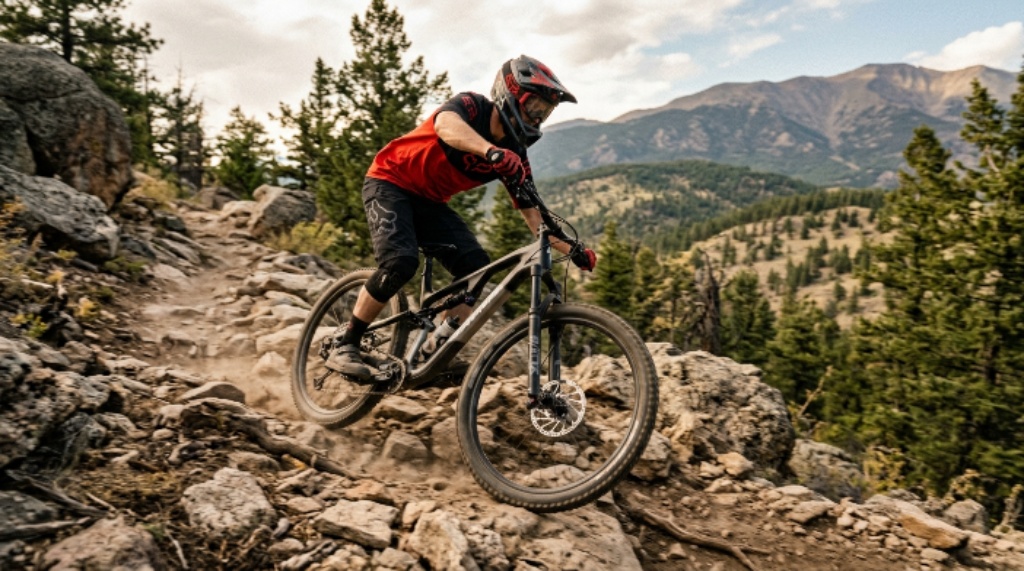

Choosing the right mountain bike is not just about speed or style. It is about staying safe on the trail. One of the most important decisions you will make is picking a bike with the right braking system. A safe braking system can mean the difference between a controlled stop and a dangerous crash. This guide will help you understand what to look for when selecting a dual disc brake mountain bike.
Why Disc Brakes Matter on a Mountain Bike
Mountain biking takes you across rocks, roots, mud, and steep descents. These conditions demand more from your brakes than a smooth road ever would. Traditional rim brakes work well on dry pavement, however, they lose power quickly in wet or muddy conditions.
Disc brakes, on the other hand, perform consistently across all weather and terrain types. They grip from a rotor mounted near the wheel hub, not the rim. Therefore, mud and water have much less effect on stopping power. This is why most serious trail riders today rely on front rear disc brakes for dependable control.
Additionally, disc brakes allow for more precise stopping. You can modulate pressure without locking the wheel up. That kind of control is essential when you are navigating a rocky descent or a tight switchback.
Understanding the Two Types of Disc Brakes
Before you buy, you need to understand that not all disc brakes are the same. There are two main types: mechanical and hydraulic.
Mechanical disc brakes use a cable to activate the caliper. They are simpler and easier to maintain at home. However, they require more hand strength to achieve strong stopping power. Over time, cables stretch and performance can decline.
Hydraulic disc brakes use fluid instead of a cable. They offer far superior modulation and require much less effort from your fingers. Most mid-range to high-end mountain bikes come with hydraulic systems. They do cost more, but the performance gain is worth it for most riders.
For beginner riders, mechanical disc brakes are a solid starting point. For those who ride frequently or on challenging terrain, hydraulic is the clear choice.
Key Factors to Consider When Choosing Your Bike
Rotor Size
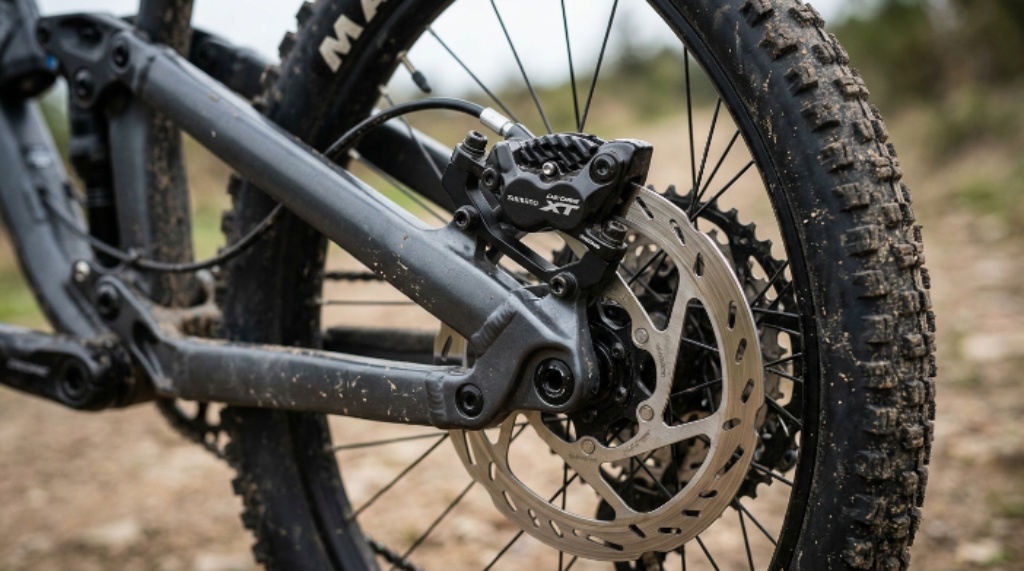
The size of the rotor has a direct impact on stopping power. Larger rotors dissipate heat more effectively and provide stronger braking. Common sizes are 160mm, 180mm, and 203mm.
For cross-country riding, a 160mm rotor is usually enough. Trail and enduro riders typically prefer 180mm or 203mm rotors. If you ride steep or technical trails, go with the larger option. More heat management means more consistent braking over long descents.
Caliper Quality
The caliper is the part that clamps onto the rotor to stop the bike. Better calipers use more pistons, which creates a larger contact area and stronger braking force. Two-piston calipers are standard on entry-level bikes. Four-piston calipers are found on trail and enduro bikes and offer noticeably better performance.
Look for calipers made from forged aluminum. They are lightweight and durable. Cast aluminum is acceptable but tends to flex slightly under heavy loads.
Brake Pad Compound
Brake pads come in two main compounds: organic and sintered. Organic pads, also called resin pads, are quiet and offer good initial bite. They wear out faster, especially in wet conditions. Sintered metallic pads last longer and handle heat better, however, they can be noisier.
For mixed-condition riding, sintered pads are the smarter choice. They maintain MTB safety by delivering reliable braking even when conditions change suddenly on the trail.
Lever Feel and Adjustability
A good brake lever should feel comfortable in your hand. Look for levers that offer reach adjustment. This allows you to position the lever closer or further from the handlebar based on your hand size. Shorter reach means quicker engagement, which is helpful on technical terrain.
Additionally, some levers offer bite point adjustment. This lets you set exactly where in the lever stroke the brakes engage. It is a small feature that makes a big difference in how confident you feel on the bike.
Frame Compatibility and Mounting Standards
Not all frames are designed the same way. Before choosing a bike, check that the frame uses a modern disc brake mounting standard. The two most common are Post Mount and Flat Mount.
Post Mount is the older standard and is still widely used on mountain bikes. Flat Mount is newer and more common on road and gravel bikes. For mountain biking, Post Mount is generally preferred because it is more robust and easier to service on the trail.
Also, check whether the frame accepts the rotor size you want. Some frames are only compatible with 160mm rotors. Others allow up to 203mm. This information is usually listed in the bike’s specification sheet.
Wheel Size and Its Effect on Braking
Wheel size also plays a role in how your brakes perform. Mountain bikes typically come in 27.5-inch or 29-inch wheel sizes. Larger wheels carry more momentum, which means you need slightly more braking force to stop at the same speed.
Therefore, if you are riding a 29er on steep terrain, consider pairing it with larger rotors. This ensures your front rear disc brakes can handle the additional momentum without overheating or fading on long descents.
Maintenance and Long-Term Reliability
A disc brake system is only as good as its maintenance. Fortunately, keeping disc brakes in top shape is not difficult. Here are a few simple habits to follow:
- Check brake pad thickness every few months. Replace pads before they wear down to the metal backing.
- Keep rotors clean and free from oil or grease. Even a small amount of contamination can cause squealing and reduced stopping power.
- Bleed hydraulic brakes once a year or whenever the lever feels spongy. This removes air bubbles from the fluid line.
- Inspect rotor for warping or excessive wear. A warped rotor causes a pulsating feel when braking.
These small steps keep your safe braking system performing at its best for years to come.
Budget Considerations
Disc brake mountain bikes are available at nearly every price point. Entry-level bikes with mechanical disc brakes start around $400 to $600. These are great for beginners and casual riders. Mid-range bikes with hydraulic disc brakes and quality components typically cost between $800 and $1,500.
Higher-end trail and enduro bikes can cost $2,000 or more. At this level, you get lighter components, better modulation, and more durability. However, a $900 bike with good hydraulic brakes will serve most riders very well.
Do not sacrifice brake quality to save money elsewhere. Brakes are a safety-critical component. Spending a little more on a quality braking system is always a sound investment.
Conclusion
Selecting a dual disc brake mountain bike comes down to understanding your riding style and matching the right components to your needs. Start with the type of terrain you ride most often. Then choose between mechanical and hydraulic brakes based on your budget and experience level. Pay attention to rotor size, caliper quality, pad compound, and lever adjustability. Make sure the frame is compatible with your preferred setup. Finally, commit to regular maintenance so your brakes always perform when you need them most.
A well-chosen bike with reliable front rear disc brakes gives you the confidence to push your limits on the trail while keeping you in control at all times. When it comes to mountain biking, that control is everything.
Frequently Asked Questions
What is the difference between mechanical and hydraulic disc brakes on a mountain bike?
Mechanical disc brakes use a steel cable to activate the caliper, while hydraulic disc brakes use brake fluid. Hydraulic systems offer better modulation, more stopping power, and require less hand force. Mechanical brakes are easier to maintain at home but generally perform at a lower level.
How often should I replace my disc brake pads?
It depends on how often and where you ride. A general rule is to inspect them every 200 to 500 kilometers. Replace them when the pad material is less than 1mm thick. Riding in wet or muddy conditions wears pads down faster.
Can I upgrade my mountain bike from rim brakes to disc brakes?
In most cases, no. Disc brakes require specific frame and fork mounts, as well as disc-compatible wheel hubs. It is usually more practical and cost-effective to buy a bike that already has disc brakes installed.
What rotor size should I choose for trail riding?
For general trail riding, a 180mm rotor front and rear is a great all-around choice. It provides strong stopping power without adding unnecessary weight. For more aggressive or enduro-style riding, a 203mm front rotor offers better heat management on long descents.
Why do my disc brakes squeal after riding in the rain?
Light squealing after riding in wet conditions is normal and usually temporary. It is caused by water or debris on the rotor. If squealing continues in dry conditions, the pads may be contaminated with oil or the rotor may need cleaning. Avoid using lubricants near the brake area during maintenance.
Related Topics: