
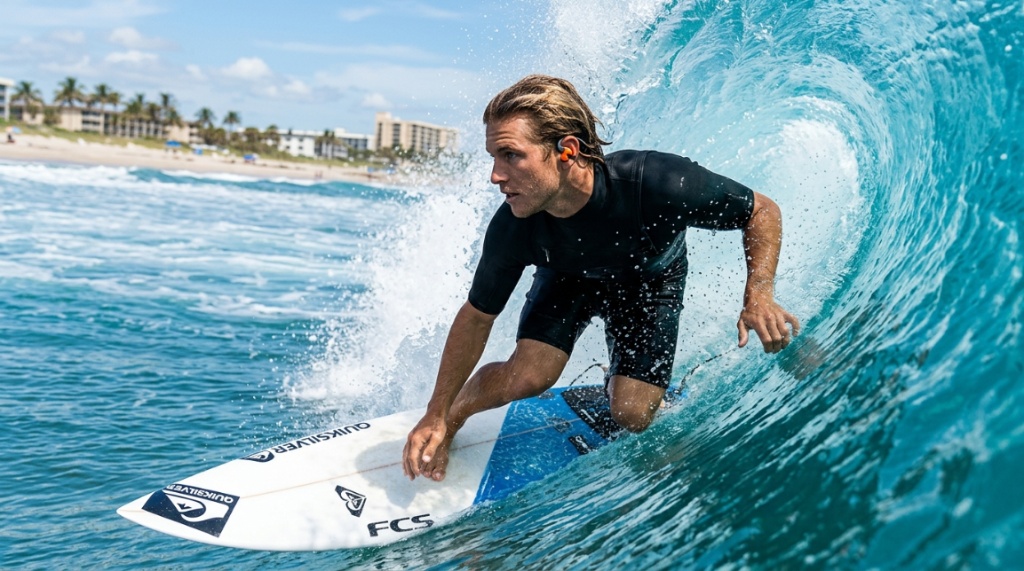

You paddle out at Sebastian Inlet, the Atlantic swell is cranking, and you’re stoked. But after a solid session, your ears feel like they’re full of water and pressure—that dull, uncomfortable ache that keeps you up at night. You know the drill: swimmer’s ear is a real threat in Florida’s warm, bacteria-rich waters. The solution is clear: you need reliable protection. Yet, walking into a surf shop and seeing a wall of foam cylinders and weird-looking plastic gadgets is overwhelming. How do you choose the right pair that won’t fall out when you’re getting pitched over the falls or make you feel completely disconnected from the ocean? This guide is designed to cut through the noise and help you find the top surf ear plugs for Florida waves that actually stay put, feel comfortable, and protect your hearing season after season
Why Standard Ear Plugs Fail in Florida Surf Conditions
Standard foam earplugs, like those designed for sleeping or swimming in a pool, simply aren’t engineered for the dynamic forces of surfing. Florida waves, especially during hurricane swells, generate intense hydrostatic pressure and chaotic turbulence. That pressure can actually push foam plugs deeper into the ear canal, causing irritation and potentially damaging the delicate eardrum. Furthermore, the constant head movement and impact of a wipeout will easily dislodge a poorly fitting plug. You did not spend your hard-earned money to buy gear that fails at the critical moment—you need equipment designed specifically for the ocean’s unique demands.
The Physics of Water Pressure and Ear Health
When you’re held down in the whitewash, water is forced into your ear canal. The pressure increases dramatically with depth and turbulence. A standard foam plug compresses under this pressure but doesn’t create a watertight seal. Water sneaks in, bringing bacteria and potential infection. Surf-specific plugs, however, use a diaphragm or seal design that balances pressure while keeping water out, mitigating the risk of a ruptured eardrum and the painful imbalance that follows a heavy duck dive session.
Common Issues: Discomfort, Fit, and Sustainability
Beyond pressure, comfort is a massive factor. If a plug is too stiff, it will cause soreness during a two-hour session. If it is too soft, it won’t create a proper seal. Additionally, many plugs get lost easily. Losing a $25 plug because the leash broke or the fit was poor is frustrating. Finally, consider the environmental factor: disposable foam plugs are a waste. We want a durable, reusable solution that can withstand Florida’s harsh UV rays and seaboard humidity, Before hitting the water with your new gear, make sure your board is fully protected—check out why Anti-Ding Surfboard Bags Work and Which Ones Are Worth Buying to keep your equipment in pristine condition.
Why You Need Specific Protection for “Florida Waves”
Florida differs from California or Hawaii. Our waves are often softer and mushier, but they pack a punch in terms of volume and extended wipeouts. The Gulf Coast has long, rolling swells, while the East Coast offers more powerful, reef-heavy breaks. Constant exposure to these conditions leads to exostosis, or surfer’s ear, which is the growth of bony lumps in the ear canal. This is a direct result of cold, windy air and cold water. While Florida water is warmer, the consistent wind and water exposure still trigger this protective bone growth. Using proper plugs is our best defense against this irreversible condition.
What to Look for in High-Performance Surf Ear Plugs
Finding the right pair isn’t about buying the most expensive option; it’s about finding the right fit and feature set for your specific ears and surfing style. The key features involve the sealing mechanism, the valve system (if any), and the physical design. First, you need a seal that conforms to your unique ear canal shape. Second, you need pressure equalization. Third, you need a floatable leash system to avoid loss. Here is the breakdown of what really matters when you’re shopping for gear to handle the Florida surf.
Seal Designs: Flanged vs. Formable vs. Custom
There are three primary types of seal designs. Flanged plugs (usually silicone with ridges) are durable and provide a consistent seal. Formable plugs, like those made from moldable silicone, conform perfectly to your ear’s shape but have a shorter lifespan. Custom-molded plugs are made by an audiologist and offer the highest level of comfort and seal, but at a high cost. For most surfers, high-quality silicone flanged plugs are the best compromise between performance and price.
The Critical Role of Pressure Equalization Valves
This is a huge selling point. A valve system allows air to pass through the plug slowly. This prevents that “suction cup” feeling when diving under water and also prevents the pressure build-up that can cause barotrauma. Without this valve, you might experience ear pain during duck dives. Look for plugs with a “membrane” that covers a small opening. This membrane allows air through but blocks water, equalizing pressure quickly so you can focus on the wave, not your ears.
Material Matters: Silicone vs. Medical-Grade Polymer
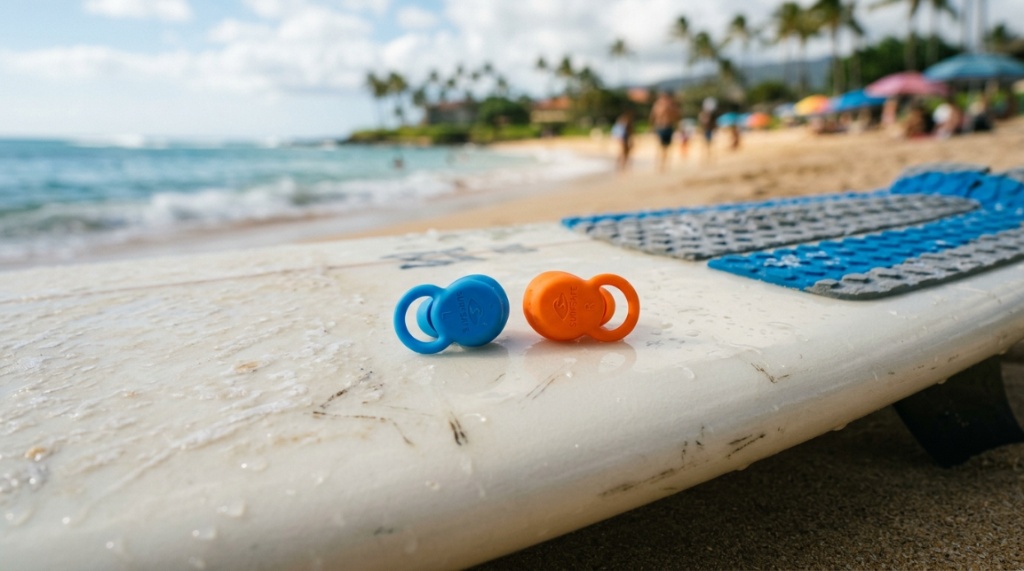
Medical-grade silicone is the gold standard. It is hypersensitive, resistant to bacterial growth, and flexible. Cheaper PVC plastics can become stiff in colder water or degrade in the Florida sun. Always check the Shore A hardness rating (usually around 35–45) to ensure they are pliable yet firm enough to hold their shape. Do not settle for hard plastic parts digging into your ear concha—that will cause “hot spots” and headaches.
| Feature | Why It Matters | What To Check |
|---|---|---|
| Seal Type | Prevents water entry and infection | Flanged or Custom Fit |
| Valve/Membrane | Balances pressure on the eardrum | Look for Filtrate or Pro Valve technology |
| Material | Comfort and longevity | 100% Medical Silicone |
| Leash System | Prevents loss in the lineup | Detachable Nylon leash |
How to Ensure a Perfect Fit for Your Ear Canal
A perfect fit is non-negotiable. If the plug doesn’t form a tight seal, it is useless. The easiest way to guarantee this fit is by testing the “suction” method. Insert the plug and gently pull your fingers away. If the plug creates a slight suction and holds without you holding it, you have a good fit. But getting there requires trial and error. Most high-end brands offer universal sizes (standard small, medium, large), but here is the secret: heat the plug slightly with body heat before inserting to allow it to conform to the contour of the ear canal.
A Step-by-Step Guide to Inserting a Flanged Plug
You might think you know how to insert them, but you likely do not. Here is the correct method:
- Wet the plug: Rinse with water to reduce friction.
- Reach over your head: Pull the top of your ear up and back with your opposite hand. This straightens the ear canal. This is the most crucial step; failing to do this will result in a crooked fit.
- Insert gently: Twist the plug slowly. Do not push it straight in; let the flanges guide it.
- Release your ear: Let your ear snap back and hold the plug in place with a finger for 10-15 seconds while it expands.
How to Test the Seal Before You Paddle Out
You can test the seal in the shower, but the real test is in the ocean. Before your first wave, do a few duck dives and check for that “cold water” trickle. If you feel water seeping in, the plug isn’t seated correctly or is the wrong size. Adjust the depth slightly. Also, check the volume of your voice; if you sound “hollow” to yourself, the seal might be too tight if you hear a bone-conduction boom, but generally, that hollow sound means you are sealed correctly.
Common Fit Mistakes Even Pros Make
Mistake number one: using the wrong size. If you have to jam the plug in, it is too big. If it spins easily, it is too small. Mistake two: applying pressure too hard, which causes pain. Mistake three: ignoring the flanges. One flange should sit just inside the canal opening; the outer flange should sit flush with the concha. If the outer flange is bent back, you have inserted it wrong.
Which Valve Technology Is Best for Duck Diving?
When you duck dive, pressure increases roughly 1 atmosphere for every 10 meters of depth. For a standard duck dive (1-2 meters), a medium-pressure valve is ideal. You want a valve that opens and closes quickly. There are two main types: membrane valves (like the Surge Pro) and “thread” vents. Membrane valves are superior because they actively regulate pressure in both directions. If you get pounded by a set and thrown down 4 meters, a good membrane valve will allow immediate equalization, preventing that sharp, whipping pain in your ear.
Membrane Valves vs. Vented Plugs
Vented plugs usually have a tiny hole that allows slow equalization. However, they also let in tiny amounts of water, which is acceptable but not ideal for infection-prone individuals. Membrane valves use a thin, waterproof material that acts like a one-way valve for air pressure. This is the “Rolls Royce” of ear plug tech. For the heavy waves found during Florida’s hurricane season, a membrane valve is the safest bet.
When Should You Use a High-Volume Valve?
If you are a big-wave surfer tackling outer reefs like Ponce Inlet or during winter swells, you want a higher volume valve, often called a “Filtrate” valve. This moves air faster. Conversely, if you are just cruising over soft waves and focusing on long paddles, a standard valve is fine. It’s about matching the technology to the intensity of your session.
Specific Valve Technologies To Consider
Brands like Doc’s Proplugs offer a simple, solid silicone block without a valve—this relies on the buoyancy of air trapped inside to equalize pressure naturally. Others like SurfEars use a membrane. The best top surf ear plugs for Florida waves usually feature that robust membrane technology because it provides both hearing clarity (you can still hear the wave breaking) and pressure management without water intrusion.
How to Care for Your Ear Plugs to Extend Their Life
Your ear plugs are a breeding ground for bacteria if you just toss them in your car after a session. Saltwater, ear wax, and sunscreen create a nasty film. Proper care is simple but crucial. Rinse them in fresh water immediately after every surf. Use a mild soap (like a drop of Dawn) to remove the oily sunscreen residue. Air dry them completely before putting them back in the case. Do not leave them in the sun—UV rays will degrade the silicone and make them brittle.
Cleaning Techniques That Preserve the Material
Do not use alcohol or peroxide. This will dry out the silicone and cause cracking. Use a toothbrush with soft bristles to gently scrub the flanges and the inside of the membrane hole. For the membrane vent, never push a needle or toothpick through it; you will pop the membrane. Instead, soak them in lukewarm soapy water and gently squeeze water through the canal to clear debris.
When to Replace Your Surf Ear Plugs
Silicone doesn’t last forever. If you notice the flanges have lost their “spring” and fold over easily, or if the plug has become discolored or hard, it is time for a replacement. Generally, with heavy use (3+ sessions a week), you should replace them every 4-6 months. With lighter use, annually. Discoloration is a sign of bacteria growth that you can’t fully clean off. Always check for cracks near the stem as this is where they will snap.
Storage Solutions to Avoid Warping
Store them in a hard-shell case. Do not push them into your wetsuit pocket and sit on them, as this will bend the flanges. Many brands include a vented case that allows airflow, preventing moisture build-up. Always keep the leash attached to the case when storing to avoid tangle, but detach when surfing to avoid snagging.
Can You Hear the Waves While Wearing Ear Plugs?
Yes, and it is important that you can. Many beginner surfers avoid plugs because they think they will become deaf to their surroundings. High-quality ear plugs are designed to maintain natural hearing while blocking water and pressure. They don’t act like ear muffs; they act like a filter. You will hear the ocean roar, your friends shouting, and the crucial sound of a wave breaking behind you. The goal is to reduce the harsh sound of water rush but keep the ambient awareness necessary for safety.
The Balance Between Protection and Sound Clarity
Ear plugs with a filter (usually a small mesh screen) allow sound waves to pass through reasonably unimpeded while blocking the physical water. You might notice a slight drop in volume (about 20-25 decibels), which is actually beneficial—it reduces the trauma from the constant hissing of the ocean. It is like wearing sunglasses; you still see, but the glare is reduced. This phenomenon allows you to actually stay in the water longer because your ears aren’t fatigued.
Why “OCD Plugs” Sound Different
Well-known brands like “Earasers” have a special acoustical filter that claims zero distortion. In reality, they are cutting out high-frequency noise (the harsh splashing) while preserving low-frequency (the rumble of the wave). This gives a more natural sound profile. When you test them, you should be able to have a conversation with someone standing 2 meters away without shouting. That is the baseline for a good product.
Training Your Ear to Interpret Liquid Sounds
Where regular swimmers use earplugs to go silent, surfers need to hear. Spend some sessions learning how the plugs change your perception. You will notice the “crack” of a lip section differs. This is a learning curve, but within a few sessions, your brain recalibrates, and you will automatically interpret the filtered sounds just as well as unfiltered.
The Top 5 Features for Florida’s Climate (Heat & Humidity)
Florida’s humidity is a different animal. A plug that works in California’s dry air might become sticky or slippery in Florida’s muggy conditions. Sweat from your head and brow can also seep down into the ear canal and break the seal. Therefore, you need plugs that feature an anti-slip textured grip and hydrophobic materials. Look for plugs with a slightly rougher outer coat or rubberized texture that holds firm even when wet. Also, consider the size of the outer handle; it needs to be big enough to grab with wet hands but not so big that it pokes out of your ear.
Breathability and Sweat Resistance
Sweat is your enemy. The top surf ear plugs for Florida waves will feature a “vented” outer cup that allows air circulation, preventing the occlusive moisture that causes fungal ear infections. Look for the Micro-vent pattern on the back of the plug. This allows air to dry the canal while you are paddling in the sun, keeping you dry longer.
UV Resistance and Durability in Sunlight
Florida sun is brutal. Cheap PVC will start to fade and harden after just a few weeks. Medical-grade silicone with UV stabilizers remains soft and will maintain its Shore A hardness rating even after 100 hours of direct sunlight. Always check the packaging for “silicone for marine use” or “UV stabilized” labels.
The “Leash” System for Rough Wipeouts
You will lose plugs. But you can reduce that dramatic loss. A good leash system is critical. The clip should attach securely to a thick cord that won’t snap during a quick rebound. The cord needs to be long enough to hang off your ear without pulling the plug out during head-dips. A strong magnet system at the attachment point is great because it breaks away cleanly without tugging your ear, preventing you from losing the plug in a wipeout but also preventing a painful tug on the lobe.
How to Test Your New Ear Plugs in the Lineup
Do not test new ear plugs during a hurricane swell. Try them in a small, mushy summer session first. Introduce them slowly. Wear them for the first 30 minutes of paddling to check for pressure. Then, start doing controlled duck dives to test the valve. Your initial worry should be dislodgement. Here is how to create a stress test to confirm they are the right pair before committing to a big swell.
The “Whitewash” Test Method
Sit in the whitewash for 5 minutes. Let the water wash over your head. If you feel a pressure change or you hear a “squish”, you have a leak. If the plug stays solid and you feel no pressure, you are in the clear. This is your first green light.
Adjusting to Different Head Angles
Surfing is dynamic. You will be hanging head down. Turn your head violently from side to side in the water. If the plug holds, you are good. The worst thing is when a plug slowly works its way out during a high-speed turn. A proper fit will hold a slight suction regardless of the force applied.
Monitoring Ear Fatigue After the Session
After your session, take them out and check your ear canal. Do you feel any pressure release? Do your ears feel “blocked”? They shouldn’t. If they feel completely clear and you hear a “pop” when removing them, that is normal suction release. But if they feel sore, you are wearing them too deep or the plug is too large. Trust how your ears feel; they are the final judge.
Finding the right protection is a journey, but it is a critical one for your long-term health and enjoyment of the sport. You need a pair that is comfortable, functional, and durable enough to handle the unique environment of Florida’s coast. If you are looking for a curated selection of the best performing models, be sure to check out our comprehensive review of the top surf ear plugs for Florida waves to see our specific recommendations and get the full breakdown of pricing and features.
Are Expensive Custom Ear Plugs Worth the Investment?
If you are surfing more than three times a week, yes. Custom-molded plugs from an audiologist offer a 100% perfect seal that eliminates all pressure points. They are crafted from a digital 3D scan of your ear canal, ensuring zero hotspots. They are pricier, but they last for years and provide an unmatched level of comfort. For the occasional weekend warrior, high-quality universal plugs are 90% as effective at a fraction of the cost. The choice comes down to frequency of use and your comfort threshold.
Cost-Benefit Analysis: Universal vs. Custom
Universal plugs (like SurfEars 3.0 or Surge Plus) cost around $30-$50. Custom ones run $150-$250. But consider the cost of surgery for exostosis, which is tens of thousands of dollars. So any protection is a good investment. However, if the universal plug doesn’t fit perfectly, it is money wasted. If you have a narrow or oddly shaped ear canal, go custom straight away.
Long-Term Health Implications of Poor Fit
Ill-fitting cheap plugs cause irritation, infection, and can even push earwax deeper, causing impaction. This leads to temporary hearing loss, blocking out the high frequencies. Over time, the constant irritation can lead to chronic inflammation. Spending a bit more on a good therapeutic brand is an investment in your hearing and overall health. Don’t compromise on the health of your ears to save $15.
Seeking Professional Help: Audiologist Fit
An audiologist does more than just mold the plug; they also measure your ear canal’s resonance frequency. They can add acoustic filters to adjust the natural sound of your voice so you don’t feel “plugged up.” While you can buy a kit online, nothing beats the professional fitting process. That personalized attention ensures no future problems.
Frequently Asked Questions
Do surf ear plugs completely block out water?
No. They are designed to minimize water ingress and pressure, but they are not a scuba seal. A small amount of water may enter around the outer flange during a heavy face-plant, but the critical inner seal protects the eardrum and prevents infection-causing water retention. They block enough to prevent pressure and contamination.
Can I use regular silicone ear plugs for surfing?
No. Regular silicone ear plugs for sleeping are too soft and will collapse under water pressure. Surf-specific plugs are made from a slightly stiffer silicone and have flanges designed to lock into the ear canal. They also lack the pressure-equalization mechanism which is vital to avoid barotrauma.
How do I know my ear plugs are too small?
If you can easily rotate the plug in your ear and water gets in while swimming, it is too small. Also, if you feel air moving past the plug or you hear “hollow” sounds and your voice sounds abnormally loud, the plug is not sealing properly. Upgrade to a size larger.
Will surf ear plugs hurt my ears?
A properly fitting plug should not hurt. If you feel pain within the first 5 minutes, you have probably inserted it too deep or it is the wrong size. Remove it immediately and readjust. Pain is a sign that the plug is pressing on the sensitive cartilage of the ear canal, which can lead to soreness.
Do ear plugs affect my balance?
They can briefly, but not due to the plug itself. The pressure equalization valve prevents a difference in pressure between your inner ear and the water. If you do not use a good valve, you might feel a slight disequilibrium on your duck dive. High-quality plugs mitigate this entirely.
How often should I wear ear plugs while surfing in Florida?
You should wear them every single session. It only takes one bad infection or a few heavy wipeouts to start the process of exostosis. Consistency is key for prevention. Make them a non-negotiable part of your wetsuit or boardies pocket, just like your leash.
Conclusion
The ocean is our playground, but it is also an environment that can be harsh on our bodies if we don’t respect it. Protecting your ears is not just about comfort; it’s about ensuring you can surf for decades. You now have the knowledge to evaluate seals, valves, and materials, and you know the difference between a cheap gimmick and professional-grade protection. The right pair of ear plugs will become as essential as your wax and wetsuit. Don’t let another session go by risking your hearing. Take action today, understand your ear shape, and invest in quality. We have provided the ultimate buying guide and the criteria for what makes these products work—now paddle out with the confidence that your ears are secure.
