

Choosing your first nail gun can feel confusing. Walk into any hardware store and you will see multiple models, different power sources, and many nail sizes. For a beginner, it is easy to buy the wrong tool.
A nail gun is a power tool designed to drive nails quickly and consistently into materials such as wood, drywall, or trim. Compared with a hammer, nail guns reduce effort, improve accuracy, and speed up projects.
For DIY beginners, selecting the right model matters. The wrong nail gun can damage materials, waste money on nails you do not need, or even create safety risks.
This DIY nail gun guide explains how beginners can choose the best nail gun tools with confidence. You will learn:
- The different types of nail guns
- Which power source works best for beginners
- Important safety features
- How to match nail size to your project
- Real examples from DIY home projects
By the end of this guide, you will know exactly how to choose a beginner nail gun tool that fits your project, budget, and skill level.
What Is a Nail Gun and Why Do Beginners Use It?
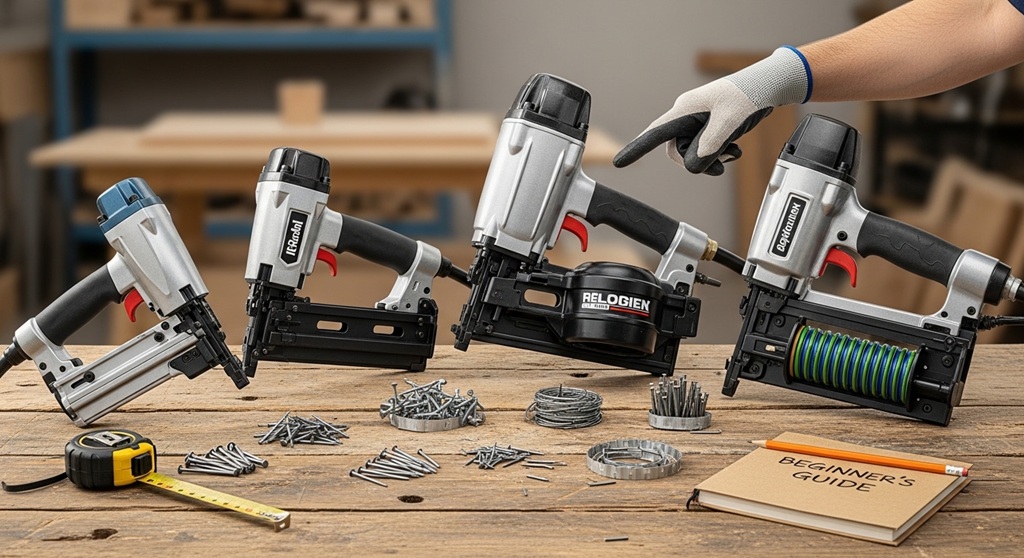
Short answer: A nail gun is a powered tool that drives nails into materials faster and more accurately than a hammer, making it ideal for DIY projects and beginner woodworking tasks.
Nail guns are widely used in construction, woodworking, and home improvement projects. Instead of manually hammering nails, the tool uses compressed air, electricity, or battery power to push nails into materials.
For beginners, this tool provides three major advantages:
- Speed — You can drive hundreds of nails in minutes
- Accuracy — Nails are placed consistently
- Less fatigue — Reduced physical effort compared with hammering
According to data from the Home Improvement Research Institute, DIY homeowners complete projects nearly 35% faster when using powered fastening tools like nail guns compared to manual tools.
This efficiency explains why nail guns have become common in beginner toolkits.
What Problems Do Beginners Face When Choosing a Nail Gun?
Short answer: Beginners often struggle with choosing the correct nail gun type, power source, nail size, and safety features.
The market offers several nail gun models designed for different jobs. A beginner may accidentally purchase a framing nailer when they only need a small brad nailer for trim work.
Common problems include:
- Choosing a tool that is too powerful
- Buying the wrong nail size
- Ignoring safety mechanisms
- Picking a heavy tool that causes fatigue
- Buying tools that require expensive compressors
This is where a structured DIY nail gun guide becomes helpful. By understanding the main tool categories and their uses, beginners can avoid unnecessary costs and frustration.
What Are the Main Types of Nail Guns for Beginners?
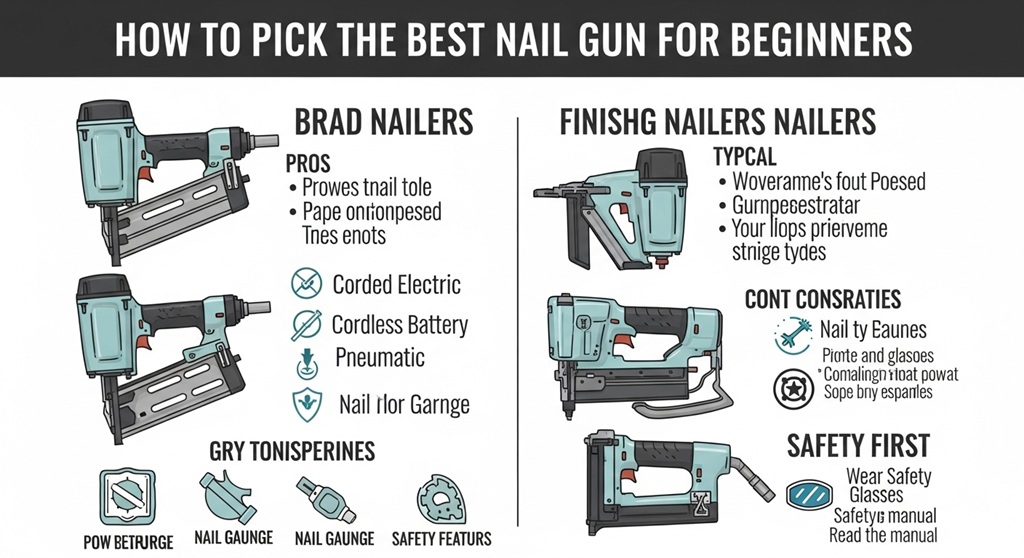
Short answer: The most common nail guns for beginners include brad nailers, finish nailers, framing nailers, and pin nailers.
| Nail Gun Type | Best For | Nail Size | Beginner Friendly? |
|---|---|---|---|
| Brad Nailer | Trim, small woodwork | 18 gauge | Yes |
| Finish Nailer | Cabinets, furniture | 15–16 gauge | Yes |
| Framing Nailer | Construction framing | 10–12 gauge | No |
| Pin Nailer | Light decorative work | 23 gauge | Moderate |
Brad Nailers
Brad nailers are the most recommended beginner nail gun tools. They use thin 18-gauge nails that leave very small holes in wood.
Common uses include:
- Baseboards
- Trim installation
- Craft projects
- Light furniture repairs
Finish Nailers
Finish nailers use thicker nails. They provide stronger holding power compared with brad nailers.
They work well for:
- Door frames
- Cabinets
- Crown molding
Framing Nailers
Framing nailers are powerful tools designed for structural construction. Beginners rarely need them unless building decks, sheds, or house framing.
Which Power Source Is Best for Beginner Nail Gun Tools?
Short answer: Battery-powered and electric nail guns are easiest for beginners because they require less setup than pneumatic tools.
Nail guns operate using three primary power sources.
Pneumatic Nail Guns
These tools use compressed air from an air compressor.
Pros:
- High power
- Long durability
- Lower tool price
Cons:
- Requires compressor
- Extra setup time
- Less portable
Cordless Battery Nail Guns
Battery nail guns are becoming increasingly popular among DIY users.
Pros:
- No air compressor required
- Portable
- Quick setup
Cons:
- Higher purchase cost
- Battery maintenance
Electric Corded Nail Guns
Electric nail guns plug into a power outlet.
Pros:
- Reliable power supply
- Affordable
Cons:
- Limited mobility
For most beginners, cordless nail guns provide the easiest learning experience.
How Do You Choose the Right Nail Size?
Short answer: Choose nail length based on the thickness of the materials you are joining.
A common rule in woodworking states that the nail should penetrate the base material by at least two-thirds of its length.
| Material Thickness | Recommended Nail Length |
|---|---|
| ½ inch trim | 1 inch nail |
| ¾ inch wood | 1.5 inch nail |
| Framing lumber | 3 inch nail |
Using nails that are too long may split wood. Nails that are too short will not hold materials securely.
What Safety Features Should Beginners Look For?
Short answer: Beginners should prioritize contact safety tips, trigger locks, and depth adjustment features.
Safety is critical when using powered fastening tools.
Important features include:
- Sequential trigger — requires pressing the tip before firing
- Depth adjustment — controls how deep nails enter the material
- Jam release — clears stuck nails safely
- Dry fire protection — prevents firing without nails
The U.S. Consumer Product Safety Commission reports that nail gun injuries often occur due to accidental firing. Safety mechanisms significantly reduce these risks.
What Does a Real DIY Case Study Show About Nail Gun Use?
Short answer: Beginner DIY projects using nail guns can reduce project time and improve accuracy.
Consider a small home improvement project: installing baseboards in a living room.
Project details:
- Room size: 200 square feet
- Baseboards installed: 70 feet
- Tools used: hammer vs brad nailer
Results:
| Tool Used | Project Time | Nail Accuracy |
|---|---|---|
| Hammer | 4 hours | Moderate |
| Brad nailer | 1.5 hours | High |
The nail gun reduced installation time by over 60%. Nail placement was also more consistent, reducing wood damage.
This example highlights why many DIY homeowners invest in beginner nail gun tools.
How Much Should Beginners Spend on Their First Nail Gun?
Short answer: Beginners typically spend between $70 and $250 depending on the nail gun type and power source.
| Type | Average Price |
|---|---|
| Electric brad nailer | $70–$120 |
| Pneumatic nail gun | $90–$150 |
| Cordless battery nail gun | $150–$250 |
Beginners should focus on value rather than the most powerful model. A basic brad nailer often handles most DIY home tasks.
Which Projects Are Perfect for Beginner Nail Guns?
Short answer: Beginner nail guns are ideal for trim work, furniture repairs, decorative woodworking, and simple home upgrades.
Popular beginner DIY projects include:
- Installing baseboards
- Building wooden shelves
- Repairing chairs
- Installing door trim
- Building picture frames
These projects require moderate holding power and precision — exactly what beginner nail gun tools provide.
Conclusion: How Can Beginners Choose the Best Nail Gun with Confidence?
Choosing the best nail gun does not have to be complicated.
The key is understanding three things:
- The type of project you plan to complete
- The nail size required
- The most convenient power source
For most DIY users, a cordless or electric brad nailer offers the best starting point. It provides enough power for trim work, furniture repairs, and small woodworking projects without overwhelming beginners.
The right nail gun saves time, improves accuracy, and makes home improvement projects more enjoyable.
Ready to start your DIY journey? Explore beginner-friendly nail gun tools and start with a small project such as installing trim or building a shelf. Hands-on experience is the fastest way to master any tool.
FAQ: Beginner Nail Gun Tools
What is the easiest nail gun for beginners?
The easiest nail gun for beginners is an 18-gauge brad nailer. It is lightweight, easy to control, and suitable for trim work, crafts, and small woodworking projects.
Do beginners need an air compressor for a nail gun?
No. Many modern nail guns are cordless or electric. These tools do not require compressors and are easier for beginners to use.
Are nail guns safe for DIY beginners?
Yes, nail guns are safe when used properly. Beginners should always choose models with safety triggers, wear eye protection, and follow manufacturer instructions.
What nail gun is best for trim work?
An 18-gauge brad nailer or 16-gauge finish nailer works best for trim work. These tools provide enough holding power while leaving small nail holes.
How long should nails be for DIY projects?
Nail length should be about two to three times the thickness of the material being attached. This ensures strong holding power.
Can a nail gun replace a hammer?
In many projects, yes. Nail guns drive nails faster and with greater consistency than manual hammering. However, hammers are still useful for small adjustments.
Read More Also: How to Choose the Best Surfboard Fin Bag for Safe Storage
Find out: Are Journalists Not That Scary After All?